
Gerðr
The Absent Sword


This piece is a collaboration with Óðr Sierra Sierra , as part of his series The Instruments of Irreversibility.
He offered a set of objects, each accompanied by a draft, as a point of entry. The idea was to take the object and its underlying structure, and write from within that space in our own style.
I chose Gerðr.
At first, I followed that approach, letting the object lead and allowing the story to take shape at a distance. But I found myself returning to his original piece. It held something lived, and it didn’t feel right to move away from it entirely.
So, with Óðr Sierra Sierra’s blessing, this became something slightly different. Not a rewrite, and not entirely separate either, but an attempt to stand alongside the original and look at it from another angle. The same object and thread, held from two different perspectives.
Some parts are imagined. Some are not.
Gerðr
On an ordinary day, inside an ordinary house, a grandfather told his grandson a story about the sabre hanging above the living room doorframe. It had always been there, resting just out of reach, gathering a thin line of dust along its spine. Its scabbard had long since been lost, misplaced somewhere in time, leaving the bare steel exposed to the open air. Sometimes the late afternoon light would catch it. The dull reflection never quite sharpened into anything dangerous. It did not look valuable, nor did it seem like an object that had ever altered the course of anything. It simply remained, existing the way certain things do when they have outlived their obvious purpose but not their physical place. The meaning the sabre carried, however, would be of far greater significance than the sabre itself.
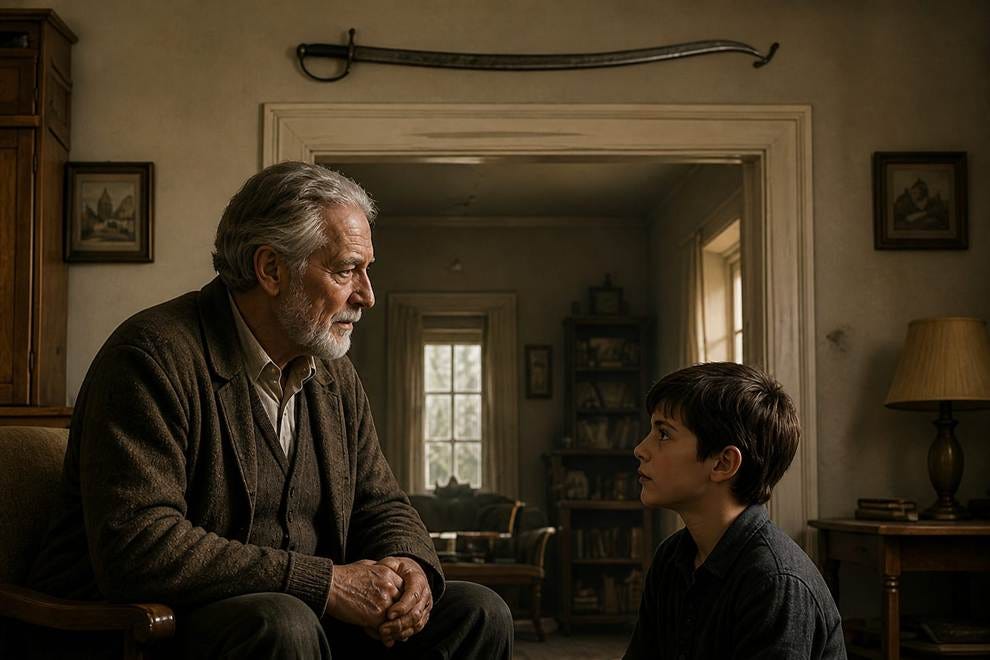
“Do you know why it is up there?” the grandfather asked, looking straight ahead. The boy shook his head side to side slowly. Some things become so familiar that they stop demanding our attention. They sit unobserved in the background, accepted without a second thought, until someone points to them in a way that subtly changes the course of a day. The old man stood, walked over to the doorway, and carefully lifted the weapon down as though it required specific respect. Returning to his chair, he studied it in silence before gesturing for the boy to sit on the floor in front of him. The boy moved quickly, sensing this moment mattered.
To his surprise, the old man placed the cold steel directly into his hands. It felt lighter than he expected, though certainly not without a distinct weight. This weight did not feel entirely physical, at least not in the way he had imagined a weapon should feel. Instead, it carried a hidden tension. He held it the way he thought a warrior might, testing its balance and turning it slightly to catch the ambient light. At the time, he firmly believed he was holding an instrument of war. Much later, he would understand that he was holding something closer to a question.
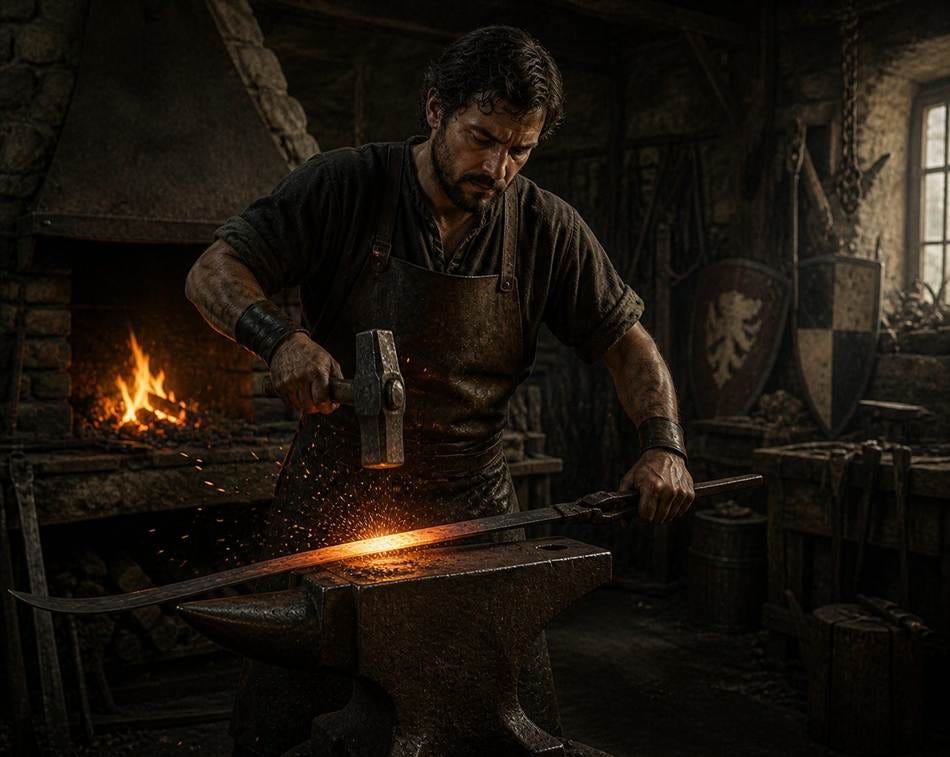
The grandfather leaned forward, resting his forearms on his knees. “It began with the iron itself,” the old man explained, “buried deep in the ground, compressed over centuries, and shaped slowly by unseen pressure.” The boy ran his thumb over the flat of the blade, trying to imagine the intense heat that birthed it. Men pulled it from the earth with an effort suggesting deep importance. Fire eventually stripped away the raw ore, and heavy hammers shaped it into something terribly precise. It was forged for a specific duel meant to prevent a wider war. Two men would meet instead of entire armies, and one clean action would replace years of drawn-out suffering. The idea felt almost comforting in its simplicity, offering a visible and contained resolution. It was a solution that seemed as exact as the sharp edge of the blade made for it.
“Did he win the duel?” the boy interrupted, looking up.
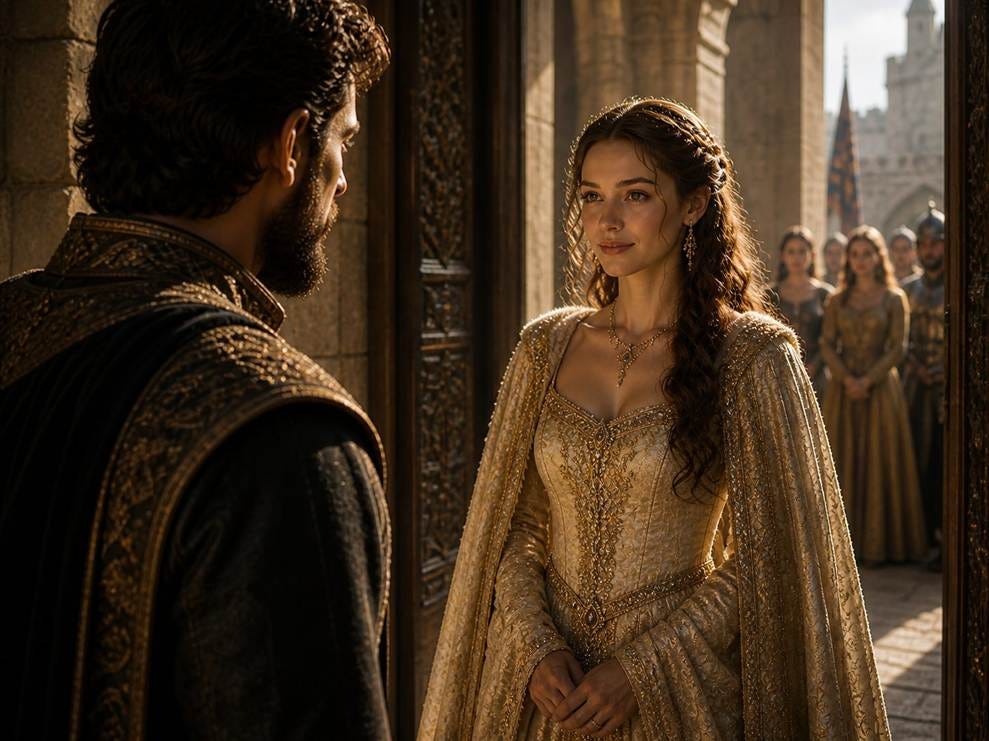
The old man smiled faintly, the lines around his eyes deepening. “The duel never took place.” Messengers arrived early in the morning at the house of the man who would wield the decisive sword, offering a different path that required no spilled blood. A marriage to a woman named Gert was proposed, an agreement was reached, and the future shifted directions entirely.
The correctness of this choice hung in the air like it hadn’t fully cemented into place until the man first saw Gert. He was struck silent by her beauty, so immediate and overwhelming that it dissolved all hesitation. He loved her at once, without calculation, and in that instant the sword lost its meaning. He gave it up without doubt, abandoning the duel not out of fear, but for the simple certainty of a life with her. The grandfather paused, letting the heavy weight of that choice settle, somewhat for the boy, but mostly for himself before continuing.
He could keep the blade and remain untouchable, or he could trade it away. He turned back inside, choosing the warmth and comfort of the path that replaced violence. The world continued without the clean break the sword had been made to deliver.
The old man cleared his throat, shifting his posture in the chair. Decades passed, and the sword was eventually reforged into a palash to suit a different kind of conflict. War had evolved by then, shifting from something that could be resolved by individual combat towards massive, organised ranks of marching men.
The new owner was a young officer, rigid in posture, his uniform carefully kept despite the dust of the march. The weapon hung at his side as he rode, the metal gently tapping against the saddle with each movement of the horse. He carried it across borders he did not draw, marching under colours he did not design. He prepared for contact, gripping the hilt with sharpened certainty. “Then a cannon spoke before the armies ever met,” the grandfather said, his voice dropping lower. An iron sphere tore through the air faster than human courage, ignoring negotiations and unrecognisable faces entirely.
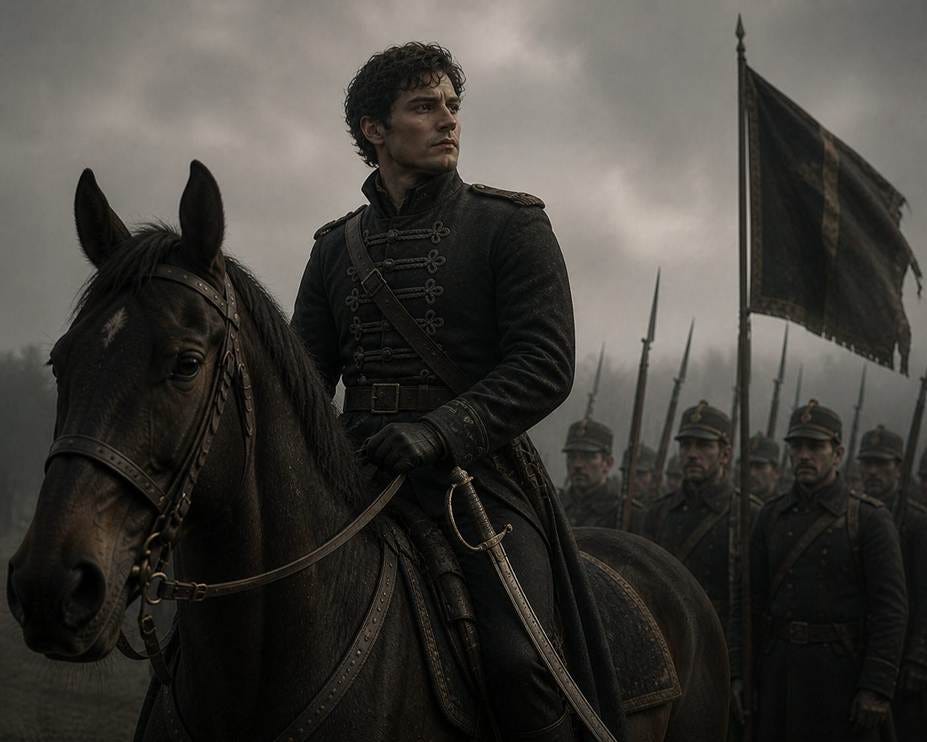
The cannonball struck the man, and the horse beneath him, before his blade ever found its intended distance, killing both in a single indifferent instant.
“Killing another man,” the grandfather noted gravely, “had become something that could be done without needing to first look him in the eye.”
The boy frowned, staring down at the unbroken steel, struggling to picture it lying abandoned in the dirt. Unlike the first owner, this soldier made no choice. Steel met iron on that battlefield, and the iron proved vastly stronger. The palash fell cleanly into the mud, entirely unstained by the conflict raging around it. An entire age had shifted underneath them. The sword remained unused, its violent purpose once again displaced by a sudden change in how the world operated. It passed to another hand, surviving the collapse of empires and the relentless multiplication of wars.
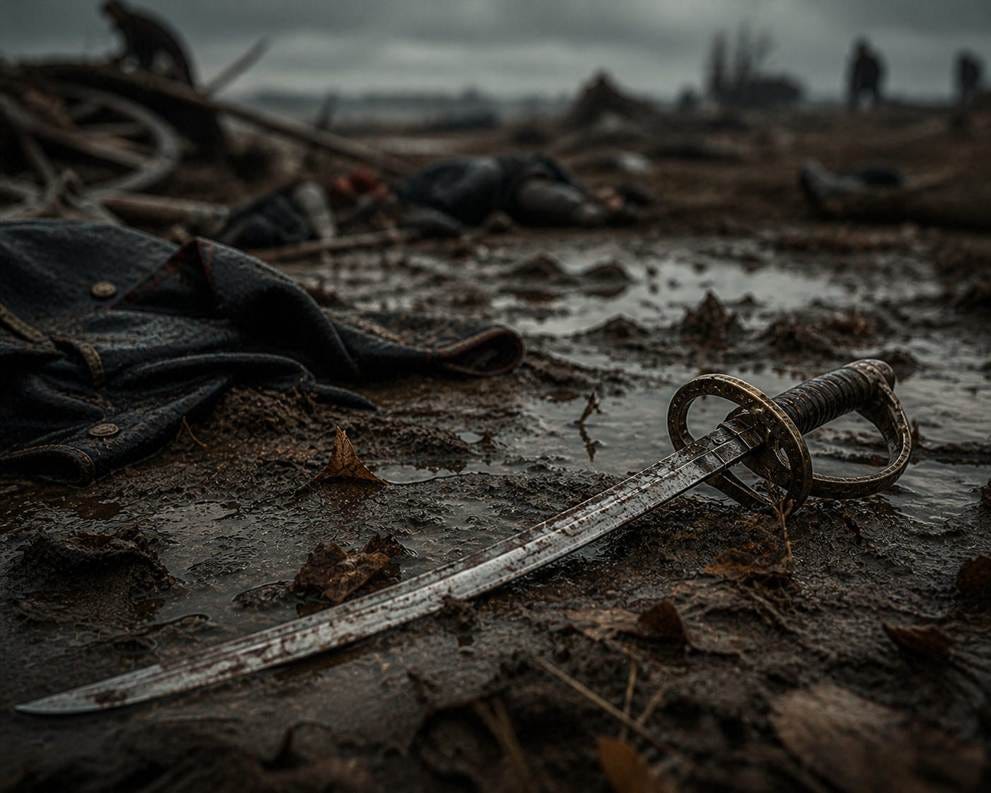
“Eventually, the metal was reshaped once more,” the grandfather continued, tracing an invisible curve in the air with his finger. It became a sabre during a revolution. It was no longer meant to decide wars, but to serve in them, and, at first, to perform a public execution ordered as a display of power. The man holding it was another officer, chosen to strike a condemned prisoner bound in the public square. The crowd waited for a visible end, expecting something unmistakable that they could point towards and call justice. The executioner raised the heavy blade high above the exposed neck, while silence held the entire square together. He looked down and saw a human who would never rise again.
He wasn’t a stranger, but a man he had once stood beside in uniform, before the world had decided they should stand apart.
The grandfather stopped speaking, letting the dense gravity of that execution square settle heavily over their own living room.
“Why did he stop?” the boy asked, his grip tightening instinctively on the hilt.
“It is difficult to strike a man you called a friend.” the old man said in a low, reflective voice.
The act did not happen, even though every piece had been arranged perfectly for its completion. This sudden refusal required no explanation, and the immediate consequence allowed for no delay. Another man stepped forward and swiftly carried out the final sentence, completing the violent arc. The weapon was taken away, having outlived yet another purpose without ever striking a single blow.
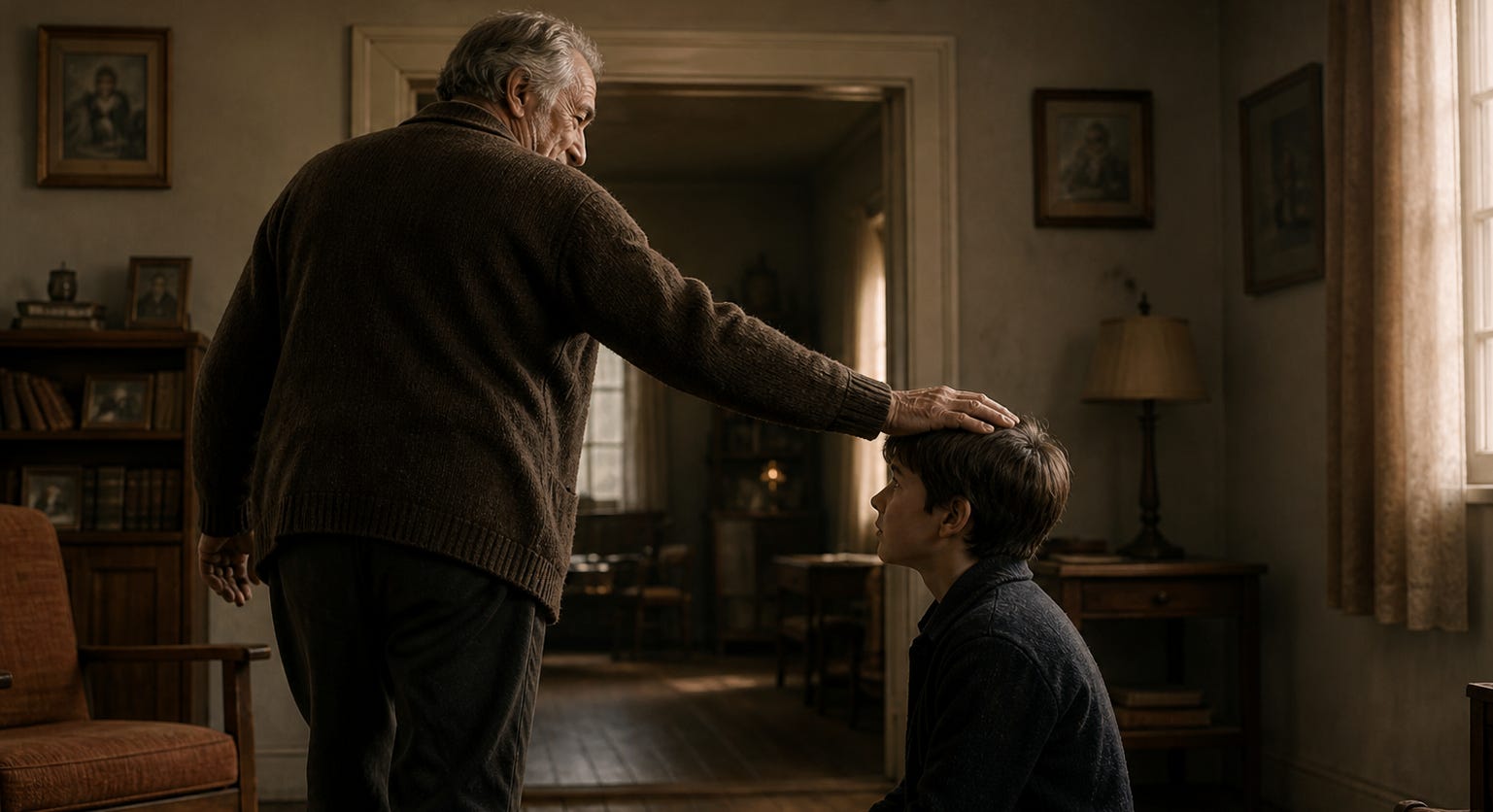
When the grandfather finished, he didn’t explain the story to the boy. Instead, they sat for a moment in the atmosphere of what was said, and what would be understood in time. He then got up, patted his grandson on the head a few times, and left the room. To the boy’s surprise, he had left the now meaningful sabre in his possession. The boy sensed that he hadn’t been given the sabre, but simply that his grandfather was no longer concerned with what it would next become.
He carried it out into the yard, into the daylight. His friend who had been waiting for him, wedged the blade between two heavy rocks to test its strength, the way children often instinctively test things. They pushed against it, expecting dramatic resistance or a loud clash to confirm its fierce nature. Instead, the steel bent slowly and silently before snapping in half, and the break felt completely underwhelming. It yielded easily to force without purpose, fracturing along a line that had existed since its original forging.
Years later, the grown man would return to the memory of that broken metal in the grass. He would think about the story his grandfather told, tracing the lineage of the man in the doorway, the fallen soldier, and the hesitant executioner. He started noticing the distinct shape of un-swung swords in his own life. He recognised them in the words he desperately wanted to say, but didn’t. Or when he almost went one way, but went the other way instead. These moments did not announce themselves loudly. They hovered briefly in the air, leaving behind a life that adjusted itself around their absence.
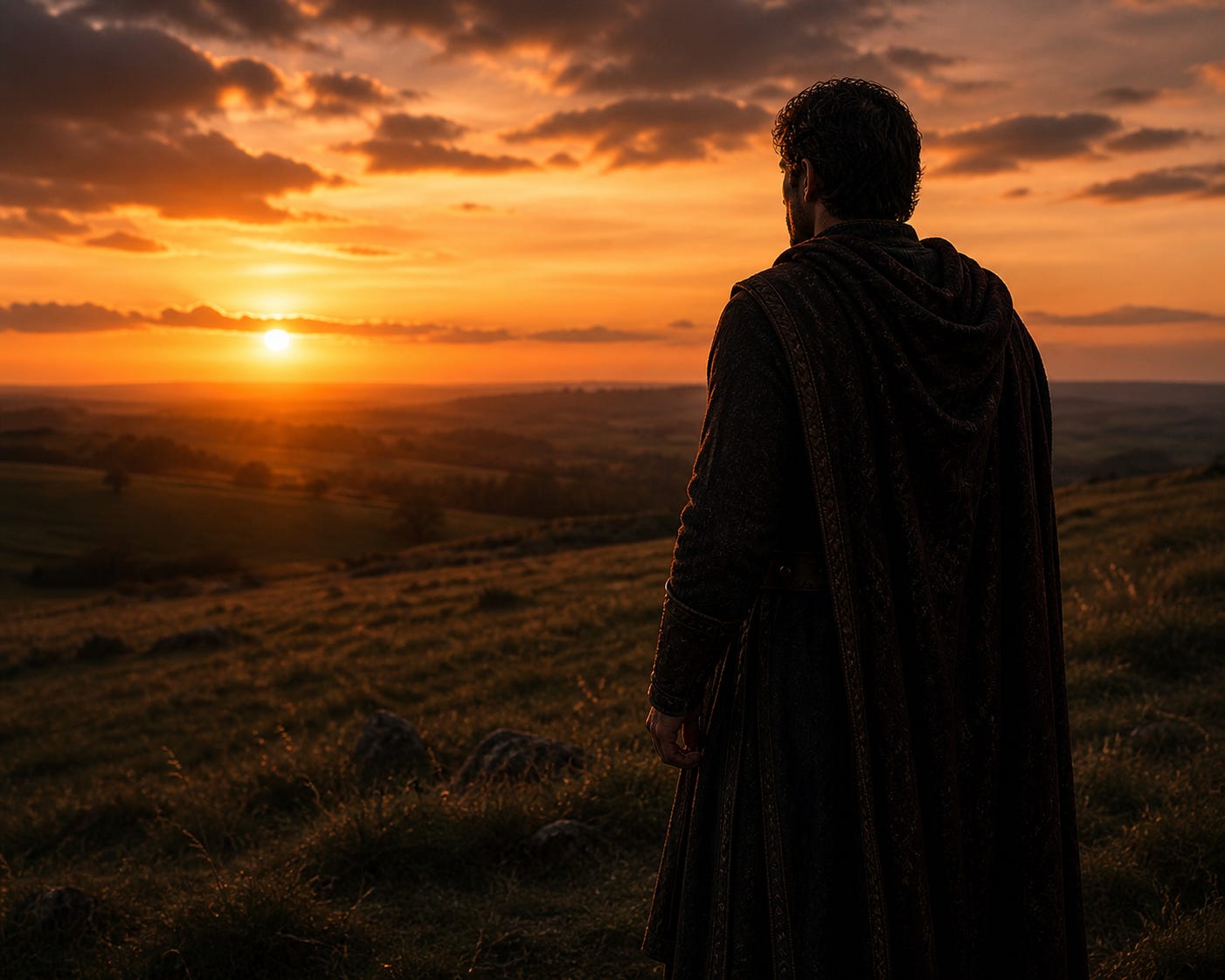
He noticed how people forge defences to protect themselves, keeping distance ready like a sharpened edge. Yet, the turning points in a life rarely sound like clashing steel. The heaviest choices happen when we consciously soften our grip and let the weapon fall. He realised the most permanent shifts in his life never came from defending his ground. They happened in the terrifying silence of stepping across the threshold with entirely empty hands.
 | A guest post by
|
This resonated with me in a similar way as the old kids story, the emperors new clothes. Perhaps all it takes to change the world is for those who see what’s truly there over the stories everyone has accepted as “reality” to stand up and say, “this is made up; it can be made differently”. Beautifully written. Well done, to the two of you.
A subtle and compelling read, thank you both.